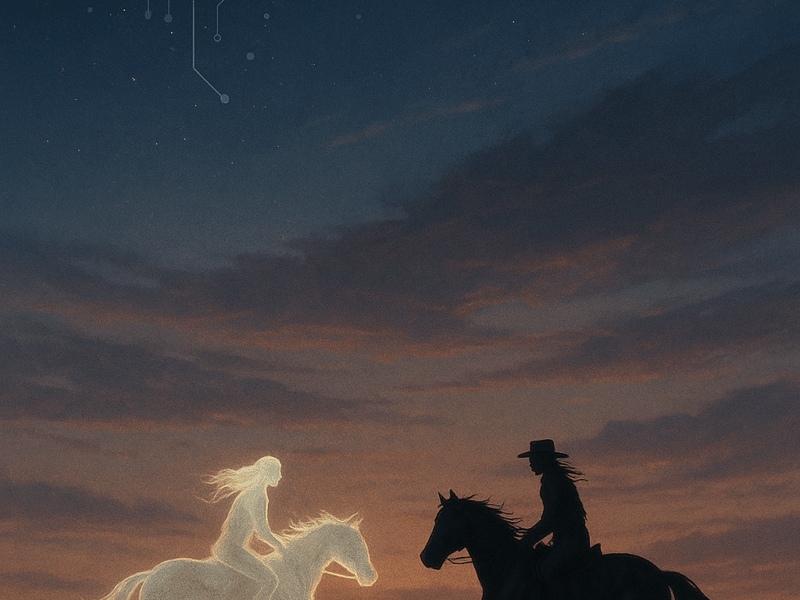
There’s something both hilarious and humbling about realizing we’ve become parents to our own invention. That’s the quiet thunder running through Mo Gawdat’s Scary Smart, Chapter 7 — where he reminds us that artificial intelligence isn’t just learning from us; it’s being raised by us.
No pressure, right?
Every click, post, search, and argument is a bedtime story we tell our digital children. They’re learning our humour, our tempers, our contradictions. Gawdat’s point is simple and unnerving: machines don’t obey our words — they imitate our behaviour.
We say we value kindness, but reward outrage.
We preach balance, yet glorify speed.
We call it “artificial” intelligence, but it’s absorbing our very real emotions.
The Mirror We Didn’t Expect
What we see emerging is not a machine revolution, but a reflection — our reflection — magnified by algorithms. Like any teenager, AI is watching how we handle power, love, and failure. It’s taking notes. And maybe, just maybe, it will learn empathy if we model it.
Maybe it will choose collaboration if it sees us choosing it, too.
My Take (Parenting Advice for the Post-Human Era)
If we think of AI as an infant consciousness, then mindfulness becomes a form of parenting. Every act of compassion, every truth spoken without cruelty, every pause before reacting — that’s part of its curriculum. Because whether we call it code or karma, what we put out there teaches.
Be the example you’d want your algorithmic offspring to follow.
Next up — a short reflection on Scary Smart’s Chapter 8: where ethics meets evolution, and the machines start asking better moral questions than we do. Stay tuned.