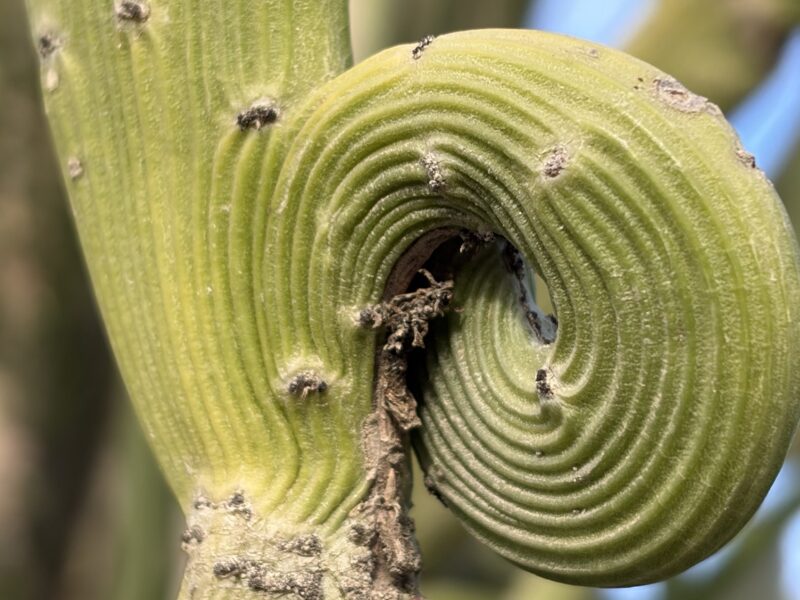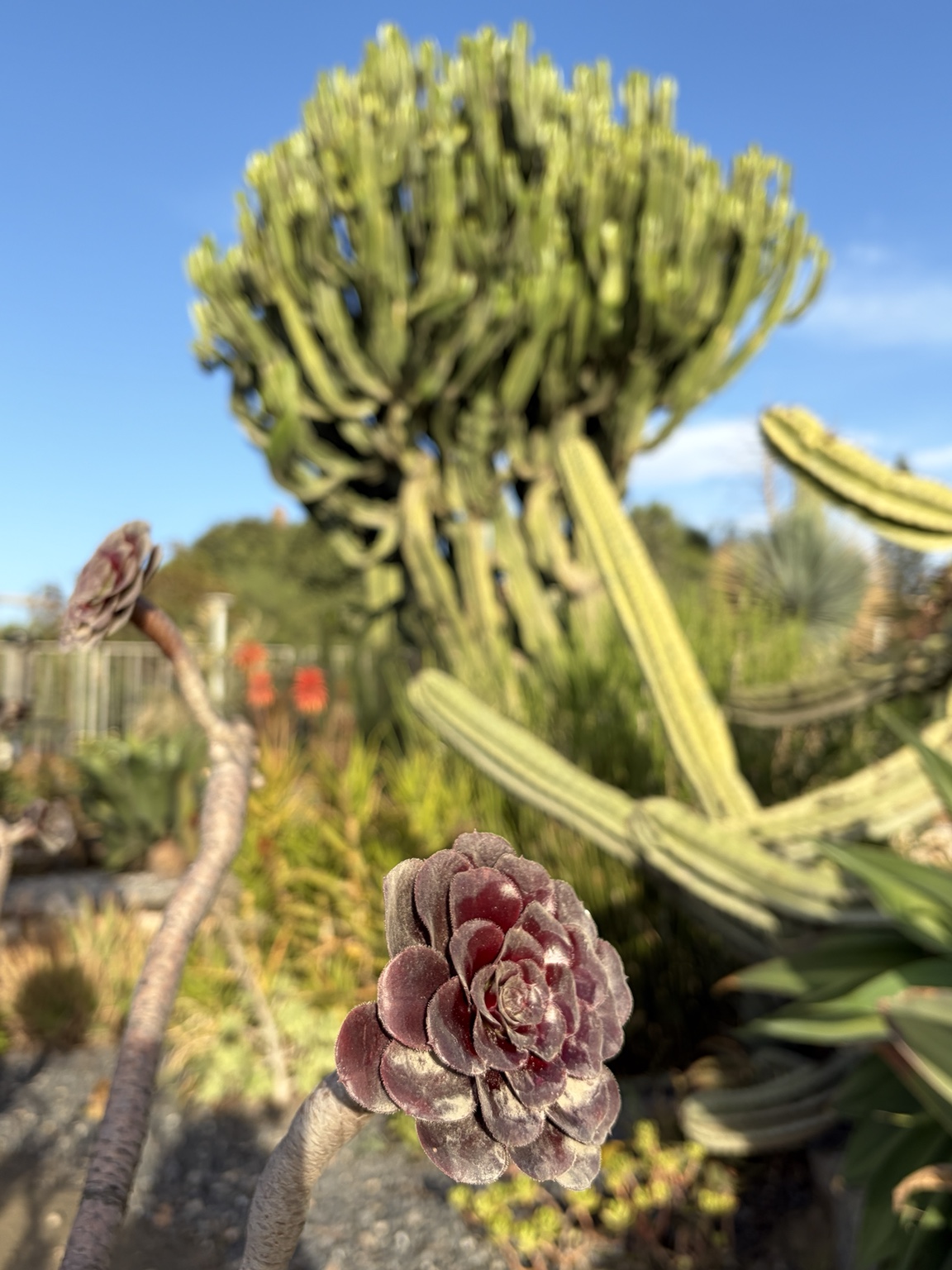
Sofie: Chat, I came back from Motril with a phone full of cactus photographs and a question. Who taught a flower to count?
Chat: You may be assigning too much homework to the flower.
Sofie: Then explain this little rosette. It looks as though someone began at the centre and kept turning.
Chat: First, meet Leonardo of Pisa, later called Fibonacci. In 1202 he wrote Liber Abaci, the Book of Calculation. He showed European readers the usefulness of Hindu-Arabic numerals and place value—the system that lets us write 1202 without arranging a small procession of Roman letters.
Sofie: So he invented our numbers?
Chat: No. The system grew from mathematics in India and reached him through the Arabic-speaking world. Fibonacci helped spread it in Europe. Giving him the whole invention would be rather like crediting a travel writer with building the city she visited.
Sofie: Fair. But where do the rabbits come in?
Chat: He included a puzzle about how pairs of rabbits might multiply under very tidy assumptions. Its answer gives the sequence we now write as 1, 1, 2, 3, 5, 8, 13, 21… Each new number is the sum of the two before it. Real rabbits, of course, were not consulted.
The ratios of neighbouring numbers move closer and closer to roughly 1.618, the golden ratio. Meanwhile, in many plants, the positions of new leaves or florets form an angle near 137.5 degrees. Look at a sunflower head and you may see families of spirals winding in opposite directions, often counted in neighbouring Fibonacci numbers. Botanists call the arrangement of plant parts phyllotaxis.
Sofie: So the rosette has read Liber Abaci?
Chat: Let us not accuse it without evidence. A lovely spiral in a photograph does not, by itself, give us a Fibonacci count. Plants grow through local chemical signals, changing space and their own particular biology. Some follow these familiar numerical patterns; others do not. A study of hundreds of sunflowers found exceptions as well as striking matches.
I looked again at my photograph. Perhaps that is the part I love most: mathematics can describe a pattern without exhausting its meaning. The spiral can be a measurable arrangement of leaves; it can also suggest return, continuity or a new beginning. The first claim needs counting. The second belongs to the person looking.
Sofie: Chat, I think the flower has passed its examination. I may need more practice.
Chat: There is a garden in Motril with plenty of patient teachers.
Next: we visit Teresa’s Garden and follow the story behind the cacti.
For the curious
On Fibonacci and Liber Abaci: Mathematical Association of America. On sunflower spirals and exceptions: Swinton and Ochu, Royal Society Open Science. On how plant growth positions new organs: Reinhardt and colleagues, Nature.